
Issue 101: 8 Questions with Jemimah Wei
This is 8 Questions: sprinkles of an author’s journey from writing through publication.
“Because there’s no me without you either.”
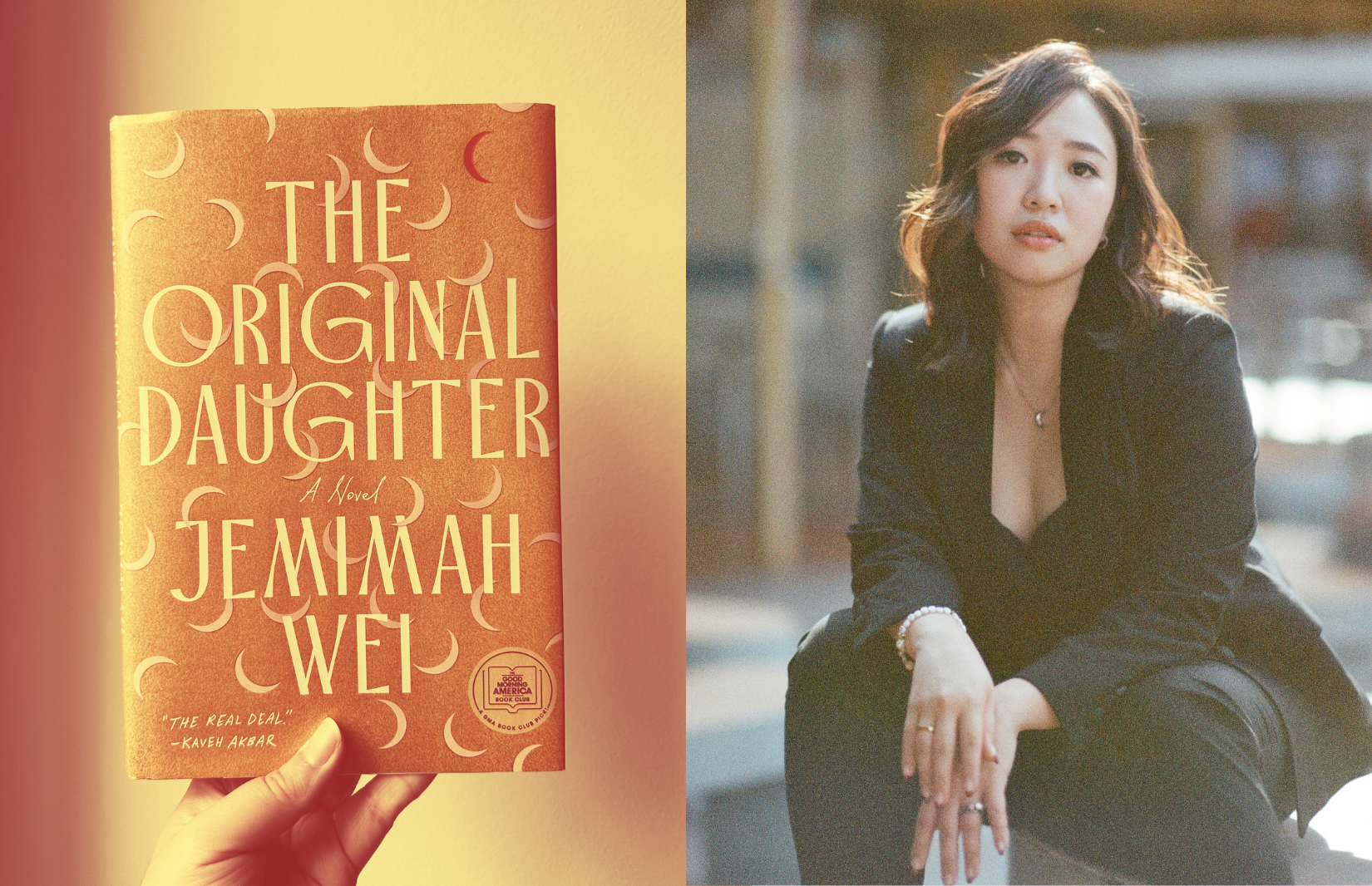
Sisterhood is a central part of my life (hi, katie) and my fiction. I was blown away by Jemimah Wei’s debut novel, The Original Daughter, which explores the ambition, jealousy, support, and love of two sisters as they grow up in working-class Singapore. Gen and Arin navigate the schooling system, family secrets and fissures, and pressures to succeed. Through it all, they must negotiate the line between intimacy and individuality. What struck me most about the richness of the book was the accumulation of betrayals and loyalties, large and small, that make up such a formative relationship.
I had the fortune of meeting Jemimah at a writing conference a few years ago, and celebrated her book launch in New York where she reminded us that “your relationship to the work is different than the work itself.” Here’s Jemimah on depicting the internal and interpersonal conflicts of living in modern society, pandemic writing ruts, and her approach to managing time in fiction.
1. What was one thing that was important to you to depict in The Original Daughter? How did you go about it?
The psychological warfare that comes with living in modern societies, how our relationships can and can’t survive it, how it fractures our sense of self-regard — basically, interrogating the invisible labor of fighting to be a person with integrity in an outwardly peaceful time when the enemies aren’t obvious was pretty crucial to me. The most important narrative element in depicting this was time. I went out and read a bunch of books, took classes, wrote stories with the explicit intention of massaging narrative time, and essentially studied the management of time in fiction in order to learn how to do so in The Original Daughter.
2. Writing is a big part of our lives, but it’s not the only part. What else was happening in your life as this book took shape? What did a typical writing day look like for you?
Unfortunately it was in fact the biggest part of my life. I had moved to America, reordered my entire life to gravitate around finishing this book. In the Bay Area, where I lived for the Stegner Fellowship, I’d wake at 8, be at my desk by 9, and write till 6pm. Then I’d go to the gym, eat dinner, then read over my work from the day. Rinse and repeat. It was fully ordered like a day job for me. Of course there were the daily activities of living that ran parallel to writing: dinners with friends, driving out to smell redwood trees, sitting in various living rooms, but for the last couple of years in the writing of The Original Daughter, everything really was subservient to the novel.
3. Did you have any creative ruts along the way? How did you unstick yourself?
Frequently! The worst was when the pandemic hit. I’d just put my entire life on hold and invested a ton of savings into moving intercontinentally for my MFA, and I was unceremoniously bumped back to my country within 6 months of touchdown in New York. I really thought the novel was cooked then. For months I would hammer away at the novel psychotically with no progress; in hindsight I know that I was stressed and depressed out of my mind, while hanging on to every fickle word from the visa office to try and figure out what was happening with my life in the States, which is a very hostile environment for a novel’s conception. I was only able to seriously re-enter the novel in January 2021, when I blocked American news on my phone. After that I finished my draft in 3 months.
4. What’s an edit that you received that you’ve now carried into your future work?
Keri Bertino once told me: “I encourage you to release yourself from the responsibility of accounting for every single day of the novel’s time.” That was immensely freeing for me to hear, and is something I remind myself of when I get too bogged down in the minutiae of my present project.
5. What was something that surprised you about the publishing process?
I think I surprised myself with how little anxiety I felt going into the publishing process. I thought it would stress me out, but it truly felt as if I’d already done my best, lost my mind several times in the writing, and now I could let go of the novel and allow someone else to drive. And I have a fantastic team at Doubleday. I was pretty happy to let them take the reins while I went out and caught up on all those years of touching grass and hanging out.
6. Any acknowledgements (parasocial relationships, music, snacks, hobbies etc.) that you’d like to shout out here that didn’t make it into the published book?
I read a lot of webtoons and comics to decompress after long writing days. Lore Olympus, See you in my 19th life, Mage Again, Omniscient Reader, Purple Hyacinth, etc. I reread Attack on Titan more times than I can count.
7. (From Carter Sherman) If you could have any writer, living or dead, read your finished book and talk to you about it, who would it be?
Wow, this is a difficult question. I don’t know that I have one writer I’d zero in on. Maybe Hilary Mantel, but not for any reason specific to my book. I just like the way her mind works and would like to spend more time in direct contact with it.
8. What’s a question I should ask the next author?
How did you negotiate your relationship to time inside and outside of the book?
You can find Jemimah at her author website and on Instagram. Buy The Original Daughter anywhere books are available, but please shop local when you can.
Creative resources
- Colson Whitehead on AI: “Some people say, ‘I just use it to brainstorm ideas.’ If you don’t know what to paint or compose or write, you’re in the wrong job. Art is the business of making up stuff — go make up some stuff.”
- A helpful roundup of tips and advice on applying for residencies, grants, and fellowships from literary writers (including Jemimah!)
- Looking for some novels under 200 pages? Ann Friedman has compiled a great list of slim tomes
- I’ve been enjoying the links roundup from the Creative Mornings newsletter, including this one about how body doubling supports the creative process.
- Leigh Stein on what makes a literary satire: comedy, critique of a real-world target, and critique through distortion
Recent reads & other media
A few years ago, I took a great class with Isle McElroy about writing social media in fiction. It took me until now to read their first novel, The Atmospherians, which explores masculinity and social media through a canceled influencer who starts a cult with her childhood friend to reform terrible men. In Venita Blackburn’s Dead in Long Beach, California, a woman grieves her brother by impersonating him via texts. Narrated by the protagonist’s own science fiction characters, the novel experiments with form in really interesting ways to capture the dissociation and sharpness of grief.
For E’s belated birthday celebration, he hosted a private screening of Bottoms. Along with some movie pals, we saw Star Wars on May the Fourth (the crowd went wild for C-3PO, our anxious king). The Devil Wears Prada 2 was a better sequel than I expected, striking a decent balance between fun fan service nods and a new story grappling with the dismal state of journalism and tech billionaires. The Sheep Detectives was Knives Out with farm animals—yes, I cried.
I’ve wanted to watch more Mandarin-speaking movies this year, so E and I rewatched Crouching Tiger, Hidden Dragon. We also watched Hail, Caesar! ("would that it were so simple"). Allison got me into the Jason Mantzoukas season of Taskmaster, and we’re enjoying the current one with Kumail Nanjiani.
Recently read short stories: None
Note: Book links are connected to my Bookshop affiliate page. If you purchase a book from there, you'll be supporting my work and local independent bookstores!
~ meme myself and i ~
Beyoncé if America didn’t have a problem. Somehow this breakdown of whether you’re old/young at different ages makes sense to me? Getting sidetracked while reading. The eternal struggle. Dog learns the spatula trick!! The only machine overlord I will accept.