Issue 98: 8 Questions with Carter Sherman
This is 8 Questions: sprinkles of an author’s journey from writing through publication.
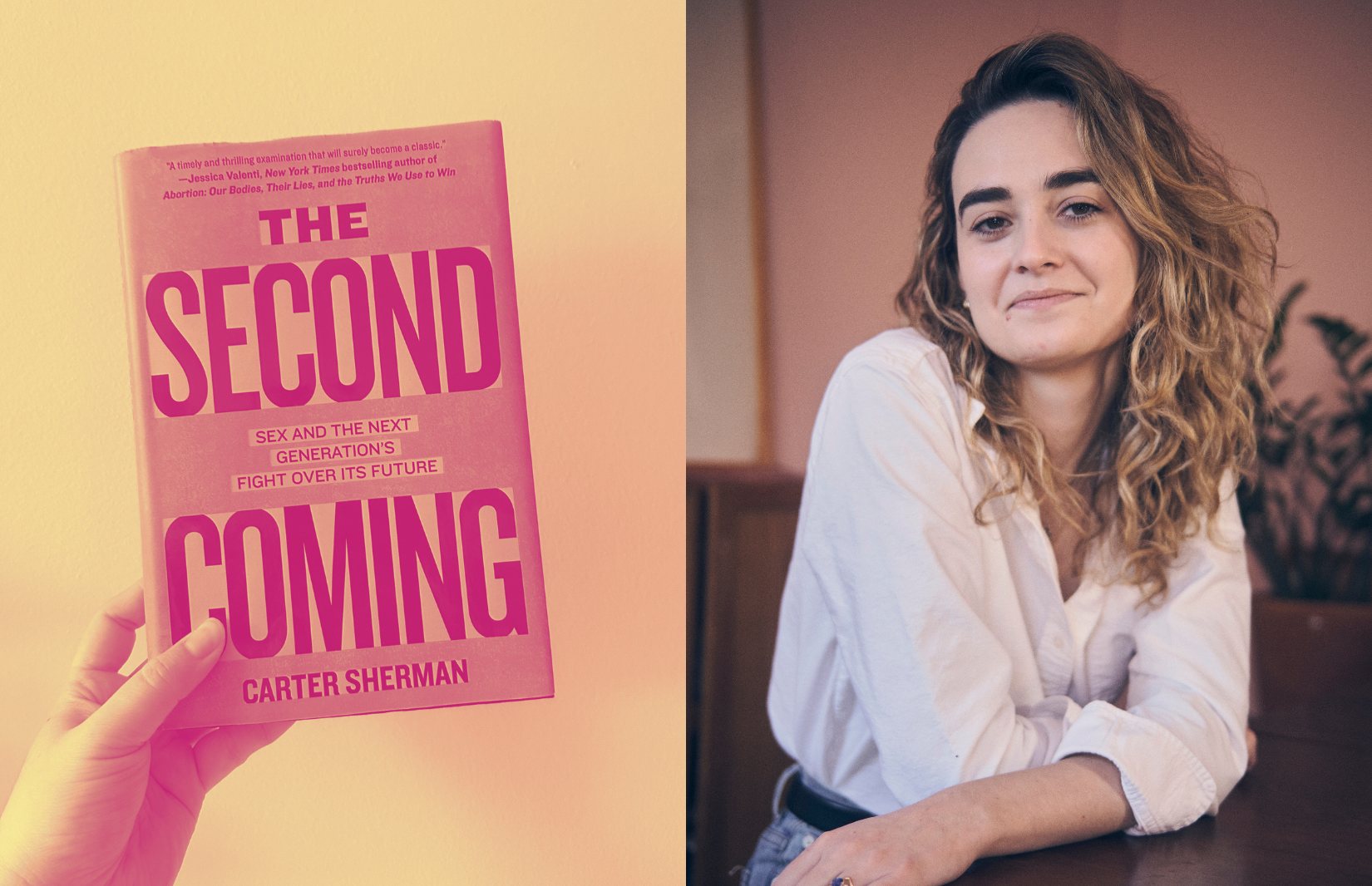
From the rise of social media and fanfiction to the #MeToo movement to the overturning of Roe v. Wade, Carter Sherman’s book, The Second Coming, examines the societal forces that have shaped Gen Z’s sexual and romantic desires. At the same time, The Second Coming connects these changes in attitude and behavior to the broader movement of sexual conservatism, and what that means for all Americans’ sexual, reproductive, and gendered freedoms.
I’ve been lucky to know Carter since we worked on our college news site together, and I learned so much from the range of young voices and identities that she centered in this book. Here’s Carter on her reporting process, embracing tangents in her writing, and the differences in working with editors in journalism vs. publishing.
1. What was one thing you really wanted to get right in The Second Coming? How did you go about it?
As part of the reporting process for my book, I interviewed more than 100 people under 30. It was critical to me that I treated them right. Many—if not most—of the people I interviewed had never spoken about their sex life in depth, let alone to a complete stranger who was recording their every word. There is also no way to guarantee that people will react well when you write about them, and making peace with that is part of being a journalist. (Even if people acknowledge that they were treated fairly and depicted accurately, they sometimes never want to speak with you again, because it's uncomfortable to surrender control.) With all that in mind, I still wanted to do my best to ensure that none of my subjects felt diminished or used.
This was especially important to me because I've been on the other side of the mic. As I detail in The Second Coming's introduction, I was interviewed in college by Peggy Orenstein, a former New York Times journalist, for her 2016 book Girls and Sex. I walked away from that experience feeling like Orenstein had been looking for me to fit a predetermined story; when I didn't, I felt like she lost interest. (I say this with all due respect to Orenstein. I read Girls and Sex and I found it to be a nuanced book.)
In my day job as a journalist, I normally try to function as a kind of NPC, in order to avoid influencing events or people. But based on my experience with Orenstein, I decided that while reporting this book, I was going to be much more open about my experiences, my personality, and my efforts to balance people's unique lives with the universal narratives that I was uncovering. In being so open with my interviewees, I hoped that they would see that I was approaching this process in good faith and give me grace.
2. Writing is a big part of our lives, but it’s not the only part. What else was happening in your life as this book took shape? What did a typical writing day look like for you?
I made the unfortunate decision to write most of this book in the same year that I started a new job, got married, and traveled the country covering a presidential election. (I'm a journalist at The Guardian, where I cover reproductive health and justice.) This was an insane decision that effectively torpedoed my social life (and my sanity) for a year. I do not recommend.
Writing and creativity tends to come easier to me in the morning, so I would usually wake around 5 or 6 am, make coffee, and write until 9 am. Then I would work at my day job from 9 am to 5 pm. In the evenings, I would either conduct interviews or, if I felt energized enough to think, keep writing.
Again: I don't recommend this pace. However, there is something clarifying about such relentless pressure—I had no choice but to buckle down and work.
3. Did you have any creative ruts along the way? How did you unstick yourself?
Because I write nonfiction, I rarely ended up in a space where I didn't know what to write—I always had some raw material to work off of, whether it was interviews or research. That said, there were various times where I would go down a rabbit hole, write several pages, realize I was going off on a tangent that detracted from my ultimate point, and scrap the whole thing. This was occasionally frustrating, because it felt like I was wasting time. However, in retrospect I know these tangents were essential to my writing process, because I needed to understand what I was not writing in order to grasp what I really wanted to say.
I never permanently erased any of my tangents. Instead, I made sure to keep them in a separate Word document. Sometimes, they would end up fitting into another part of the draft. Other times, I would just take a turn of phrase that I had deleted and tweak it to fit its new place.
4. What’s an edit that you received that you’ve now carried into your future work?
As a journalist, I've had the opportunity to be edited by a wide array of people, so I've received quite a bit of advice that continues to inform my work. For instance: delete adjectives and focus on finding better verbs. Or: your writing will never be as beautiful as it was in your head, so use the time you have to get your writing to the point that you're at least saying what you want to say. (When you write and edit as regularly as most journalists, you also learn to stop taking notes like this personally. I believe that a tough edit is a gift.)
However, I'm going to take this opportunity to focus on a phenomenon that an editor once pointed out to me and that now bothers me whenever I encounter it: contradictions in terms in descriptive language. For example, I was recently reading a book wherein the author used the phrase "shard of softness." A shard is by nature sharp. Alternatively, another book I read recently talked about a character having "a mist of tears dusting her eyes." Mist is wet. Dust is dry. Whenever I notice these contradictions, I get taken out of a scene immediately.
To catch these contradictions, I tried to read my entire book out loud. It's basic advice, but it always jarred loose new thoughts.
5. What was something that surprised you about the publishing process?
Honestly, what surprised me most was the deference I received as an author. In my journalism work, my editor is my boss. While I've always had good editors who are open to conversation about proposed edits, it's ultimately my job to write a story that's in line with their preferences. But while writing my book, I was able to reject any edits I didn't agree with, because my editorial team prioritized preserving my voice and intent above all else. I was seen as the ultimate authority on my book, which in turn led me to push myself to write as authentically as I could.
That said, this can be a double-edged sword. Journalism editors often edit articles extremely thoroughly, whereas book editors don't typically do as much editing. I loved my book editor and had a good time working with her, but I know from others' experiences that sometimes book editors use their deference to the author as an excuse to do suboptimal editing.
6. Any acknowledgements (parasocial relationships, music, snacks, hobbies etc.) that you’d like to shout out here that didn’t make it into the published book?
There was one hellish weekend where I realized that my fact-checker had missed several important errors, so I realized that I could no longer trust her work and had to re-do all of the fact-checking myself. For some inexplicable reason, I put the 2015 album "The Fool" by Ryn Weaver on repeat—and ended up being fiendishly productive. So, shout out Ryn Weaver.
Going on regular runs was also critical to my mental health. When you spend most of your days hunched over a computer, straightening out your back and turning off your brain is magical.
7. (From Eshani Surya) Ask them to assign their most recent book a drink.
The Second Coming is definitely a Cosmopolitan, if only for the "Sex and the City" connection.
8. What’s a question I should ask the next author?
If you could have any writer, living or dead, read your finished book and talk to you about it, who would it be?
You can find Carter at her author website and on Instagram. Buy The Second Coming anywhere books are available, but please shop local when you can.
Creative resources
- “67 Books by Women of Color to Read in 2026” compiled by Lucy Yu, owner of the fabulous Yu & Me Books in Manhattan’s Chinatown
- A candid interview with author Jeremy Gordon (whose book See Friendship I read last month): “You need the courage to start over or walk away if the idea isn’t right, to not push it and not force it. Not to say you should run away from a challenge, but it should be fun on some level. I don’t subscribe to the philosophy that writing is a torture. I think if you’re not enjoying the writing process, you’re in the wrong career.”
- Matt Berninger of The National traded in notebooks for a baseball!
- Summer workshop applications are open for the One Story’s Writers’ Conference, Aspen Summer Words, and the Mendocino Coast Writers’ Conference
- “The perfect alchemy of a propulsive read” by Chelsey Feder
Recent reads & other media
Martyr! by Kaveh Akbar was phenomenal, and I read most of it on jury duty. I read Meditations for Mortals over the course of January and have been trying to accept I will never magically “be on top of things” (devastating). As a start, I’ve been keeping a done list. (My sister and I joke that we need Oliver Burkeman to save us. Burkeman-heads rise!) In Wintering, Katherine May explores personal “winters” and literal winter survival, and its emphasis on seasonality really resonated with me.
E and I saw Send Help, featuring the great Rachel McAdams and Dylan O’Brien as an employee and her shitty boss who have to survive on a deserted island. The Moment, Charli XCX’s concert mockumentary, took some interesting swings but never fully leaned into the absurdity of its premise. Despite knowing very little about it, I loved Nirvana the Band the Show the Movie. The tone is Nathan Fielder Canadian weirdness meets Lonely Island sketch comedy and friendship. For Valentine’s day, we watched The Taste of Things, which will go down as one of the most exquisitely filmed movies about food, and made us both bawl and hold each other at the end.
I’m a bit late to the (hockey) game, but I watched Heated Rivalry. Thanks to Mamdani’s New York, I’m also reading the book from the library and it’s been interesting to see just how faithful an adaptation the show is. I’ve also been watching the latest season of Bridgerton and The Pitt. The Pitt continues to explore the brokenness of our healthcare system and celebrates those who work within it, and I love that that same care extends so much to the actual making of the show.
“To Asawa, all acts, including daily activities, held creative potential.” Some friends and I saw the Ruth Asawa retrospective at the MoMA, and I was blown away not just by her commitment to the wire sculptures she’s known for, but the number of mediums she explored and advocacy she pursued later in her life.
Recently read short stories: Hóngmén Banquet by Alice Evelyn Yang, An Excerpt from The Rusticated by Lu Han
Note: Book links are connected to my Bookshop affiliate page. If you purchase a book from there, you'll be supporting my work and local independent bookstores!
~ meme myself and i ~
Healing through The Artist’s Way. Going to dinner when you’re already starving. “You’re Beautiful” if it was played on a groan tube. Coffee shops then and now. Staying informed and educated. American Psycho but with quarter zips.